Between December of 2011 and August of 2012, CIRP surveyed 1,227 U.S. consumers who purchased an iPhone, iPad, or Mac, and found that while Apple Stores sold by far the most Macs and iPads during the period, they didn't sell nearly as many iPhones as the company's retail partners.
In the U.S., Apple's retail stores, along with the company's online storefront, sold 47 percent of the Macs and 40 percent of the iPads purchased by the survey sample during December 2011 and August 2012. But they only sold 21 percent of the iPhones. AT&T and Verizon stores both sold more than Apple, with 28 percent and 26 percent shares of sales, respectively. And Best Buy and Amazon (via fulfillments) together sold nearly as many iPads as Apple itself.
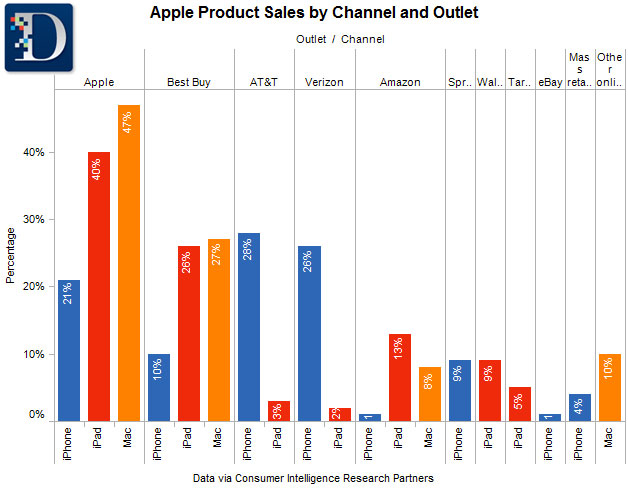
"Apple has around 250 stores in the U.S., while Best Buy and Best Buy Mobile total 1,300, and AT&T, Sprint, and Verizon have over 5,000 combined," CIRP partner Mike Levin toldAllThingsD. "Clearly, the Apple stores are much more productive on a per-unit basis, but their relatively low store count keeps them reliant on the carriers and Best Buy, not to mention Walmart, Target and others, for the vast majority of their retail sales."
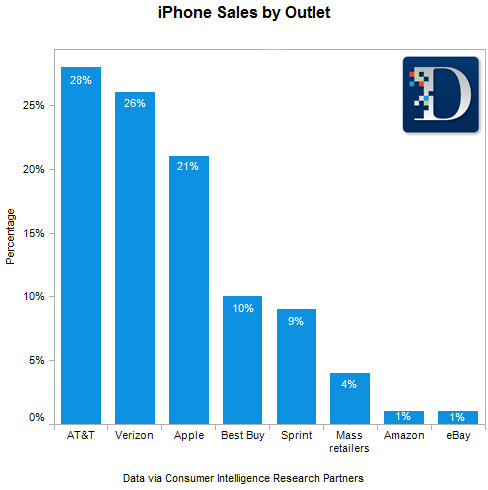

Ultimately, Apple's retail partners are as critical to the company's success as its own stores. Sure, the typical Apple Store might cater to 17,000 visitors per week, but that foot traffic translates to a smaller-than-expected share of the company's overall business. As CIRP co-founder Josh Lowitz told AllThingsD, "Everyone who lives in an Apple Store city thinks that is where everything happens, but you can't sell 40 million plus iPhones in a year through just 250 stores."


0 comments:
Post a Comment